

Essiac Tea: From Rene Caisse to Today
In 1922, a nurse in Northern Canada received a traditional botanical formula that would become the cornerstone of her life's work. This pivotal moment began the documented essiac tea history, a narrative rooted in the quiet landscapes of the 1920s. It's understandable to feel a sense of confusion when you're searching for the truth among countless modern imitations and conflicting claims. You deserve a clear path to understanding the heritage of this four-herb blend without the distraction of marketing hype or complex jargon.
This article provides a faithful account of the Rene Caisse timeline and the specific botanical characteristics of the traditional herbs. We'll examine the documented facts surrounding the origins of the formula and provide the knowledge you need to identify the genuine Canadian preparation. By exploring this history, you can feel confident in the legacy of these four essential botanicals.
Key Takeaways
- Trace the roots of the formula back to a 1922 encounter in Northern Canada and understand how essiac tea history was shaped by its steward, Rene Caisse.
- Uncover the origin of the name "Essiac" as a tribute to its developer and follow its growth in popularity across Canada during the early 20th century.
- Learn the botanical characteristics of the four traditional herbs, such as Burdock root and Sheep sorrel, that make up the authentic blend.
- Gain the knowledge to identify the genuine Canadian formula and choose the format, whether tea, capsule, or extract, that best fits your daily routine.
The Origins of the Essiac Formula in Northern Canada
Essiac tea is a traditional Canadian herbal blend consisting of four primary botanicals. Its story is inseparable from the rugged landscapes of Northern Canada, where the ingredients were originally sourced. Understanding essiac tea history requires looking back at how this formula transitioned from traditional knowledge to a standardized preparation that's remained consistent for over a century.
Rene Caisse and the 1922 Discovery
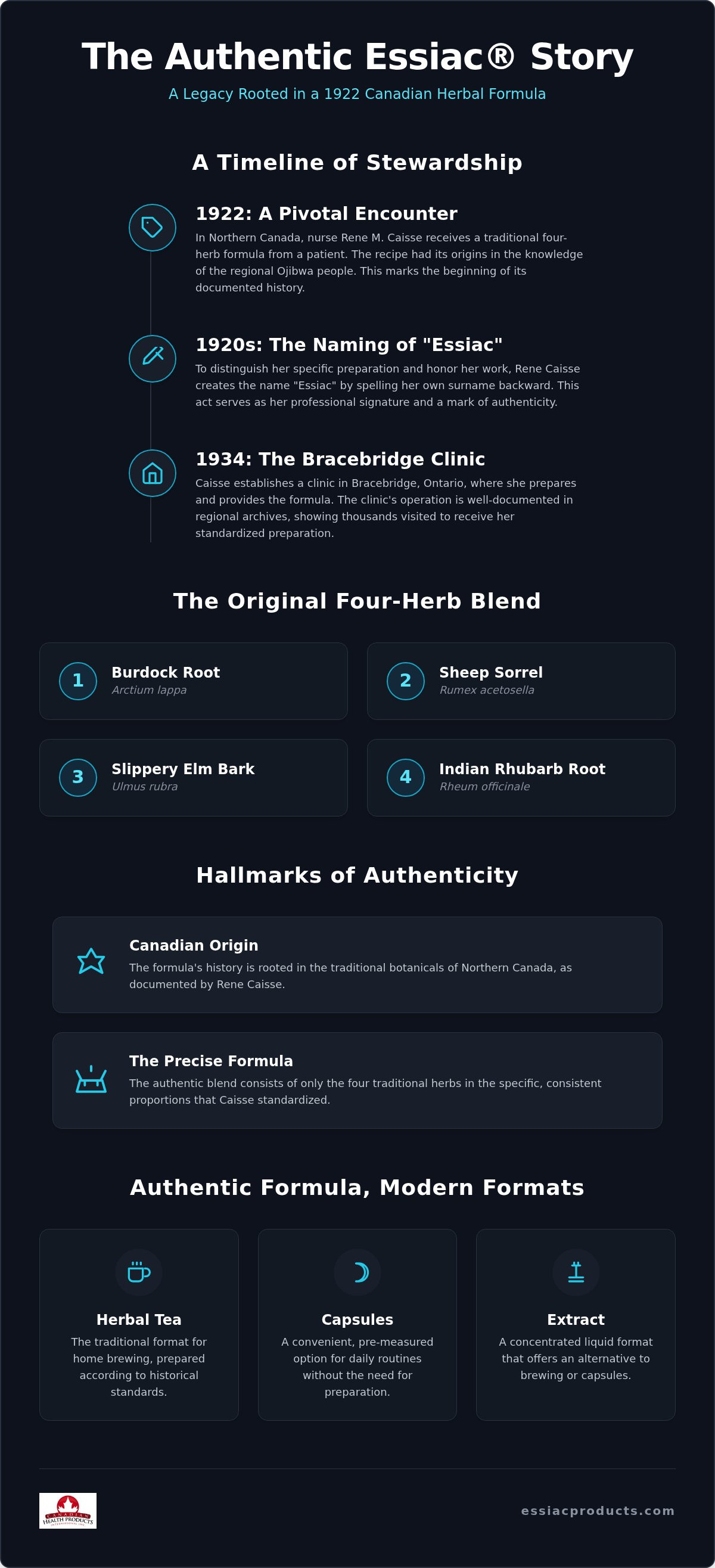
Rene Caisse was a professional nurse whose dedication to her patients led her to a significant encounter in 1922. While working at a hospital, she noticed a patient with unique skin markings and inquired about their origin. The patient shared the story of a traditional herbal blend received from an Indigenous person in the region. Caisse recognized the gravity of this information and began documenting the specific herbs involved. This period marks the formal beginning of essiac tea history, as she moved the formula from oral tradition into a structured professional practice. She approached the knowledge with the precision of a trained nurse, ensuring the proportions were recorded accurately.
The Ojibwa Influence and Traditional Roots
The formula's roots extend back to the Ojibwa people of Northern Canada. These traditional roots are grounded in the local flora of the northern wilderness, specifically:
- Burdock root (Arctium lappa)
- Sheep sorrel (Rumex acetosella)
- Slippery elm bark (Ulmus rubra)
- Indian rhubarb root (Rheum officinale)
Rather than viewing these plants through a modern lens, Caisse respected them as part of a historical botanical heritage. She spent years refining the preparation process, moving the blend from a raw harvest to a stable, reproducible herbal tea. This stewardship ensured that the integrity of the original four-herb formula was preserved for future generations.
The Development and Naming of the Essiac Legacy
The transition from a personal recipe to a recognized name marks a significant chapter in essiac tea history. Rene Caisse chose to protect the identity of her four-herb blend by renaming it. By spelling her own surname backward, she created the name "Essiac." This wasn't merely a creative choice; it served as a professional signature. It ensured the formula remained linked to her specific standards and botanical proportions. Over time, the name became synonymous with the traditional ratio of Burdock root, Sheep sorrel, Slippery elm, and Indian rhubarb. This naming convention helped distinguish her work from other herbal preparations appearing in the region.
From Caisse to Essiac: The Legacy of the Name
Renaming the formula was a deliberate act of stewardship. Caisse wanted to ensure that anyone seeking the blend could identify her specific preparation. As interest grew throughout Canada between the 1920s and 1940s, the name "Essiac" became a mark of authenticity. It represented a commitment to the original four-herb formula and the methodical preparation process Caisse developed. Even as modern imitations have emerged, the legacy of the name remains tied to her historical archives and professional standards.
The 1930s Clinic and Public Record
During the 1930s, Caisse established an independent clinic in Northern Canada. This facility became a primary hub for those seeking the traditional preparation. The clinic's operation from 1934 onward is well-documented in regional archives and historical newspapers. Records show that thousands of individuals traveled to the region to receive the formula directly from Caisse. While many anecdotal stories circulate about this era, historians rely on these verified records to understand the scale of her work.
The archives provide a grounded perspective on how the formula was perceived by the public and officials during the mid-20th century. This era of essiac tea history was defined by a steady, methodical approach to sharing the formula. If you're looking to explore the same traditional blend she provided at her clinic, you can find the authentic Essiac Herbal Tea prepared according to these historical standards.
The Botanical Heritage: The Original Four-Herb Blend
The botanical profile of the original formula has remained unchanged since Rene Caisse first standardized it. A significant part of essiac tea history involves the transition from wild-harvested flora to a precise, documented ratio. This four-herb blend relies on the specific botanical combination of Burdock root, Sheep sorrel leaves, Slippery elm bark, and Indian rhubarb root. Sourcing these plants from their traditional Canadian environments ensures that the heritage of the formula is maintained with absolute integrity.
Burdock Root and Sheep Sorrel
Burdock root, known botanically as Arctium lappa, is a hardy biennial plant that thrives in the northern regions of Canada. It's recognized by its large, heart-shaped leaves and deep, sturdy taproot. In contrast, Sheep sorrel (Rumex acetosella) is a smaller perennial. A critical distinction in the original formula is the use of the Sheep sorrel leaves only, rather than just the whole plant. This detail is often overlooked in modern imitations but is essential to the historical preparation Caisse provided.
Slippery Elm Bark and Indian Rhubarb Root
The third component is the inner bark of the Slippery elm tree (Ulmus rubra). This bark is harvested and processed into a fine powder, which gives the tea its characteristic consistency. Finally, Indian rhubarb root (Rheum officinale) completes the blend. While various species of rhubarb exist, this specific variety was chosen for its distinct botanical properties.
Modern Essiac research often examines these four herbs to understand their individual characteristics and how they interact within the traditional preparation. Maintaining the exact ratio of these four botanicals is vital, as adding or removing ingredients alters the formula's historical identity. To ensure you are using the documented blend, you can find the original Essiac Herbal Tea prepared according to these historical standards.
Preserving Authenticity and Modern Formats
The legacy of Rene Caisse has transitioned from a small clinic in Northern Canada to a standard of botanical excellence recognized globally. A significant part of essiac tea history involves the careful preservation of the original four-herb ratio while adapting to the practical needs of modern life. While the traditional brewing process remains a respected practice, newer formats allow for easier integration into a daily routine without compromising the formula's integrity.
Evolution of Formats: From Tea to Extract
Traditional preparation involves a specific brewing and cooling process that requires both time and refrigeration. For those with busy schedules, Essiac Vegetable Capsules provide a practical alternative that requires no preparation. Similarly, the Essiac Extract Formula offers a concentrated option for on-the-go use. Using the extract is straightforward; you simply add the suggested amount to water. These formats maintain the exact botanical proportions of the original 1920s blend, ensuring that convenience doesn't come at the expense of historical accuracy.
Identifying the Genuine Canadian Formula
Identifying the authentic blend is essential because modern variations often add four additional herbs to the mixture. These 8-herb versions don't align with the documented archives of Rene Caisse. As the faithful steward of this legacy, Essiac Canada International maintains the proprietary rights to the original formula. To verify authenticity, you should look for specific markers on the packaging:
- The "Made in Canada" heritage mark, signifying its geographical roots.
- The Rene Caisse signature, which acts as a professional seal of approval.
- The official ESSIAC® registered trademark.
Choosing the genuine formula means respecting the historical timeline established over a century ago. By focusing on the traditional four-herb blend, you're following the same path Caisse laid out in Northern Canada. Whether you choose the powder, capsules, or extract, the commitment to botanical purity remains the same.
Honoring the Legacy of the Four-Herb Formula
The narrative of essiac tea history is one of steady stewardship and respect for botanical tradition. From the early 1922 discovery in Northern Canada to the establishment of the independent clinic in the 1930s, Rene Caisse dedicated her career to preserving the integrity of this specific four-herb blend. You've learned how to distinguish the authentic Canadian heritage from modern variations by looking for proprietary markers and the original botanical ratio. Identifying the genuine formula ensures you're following the same path Caisse laid out over a century ago.
Staying true to this legacy means choosing a preparation that honors the work started in the 1920s. As the proprietary rights holder to the original formula, we're committed to providing the same traditional blend that Caisse standardized. Whether you prefer the classic tea, capsules, or the extract, you can trust in the purity and documented lineage of the ingredients. It's a privilege to act as a guardian of this knowledge for your routine. Shop the Authentic Rene Caisse Essiac Formula and connect with a century of Canadian botanical heritage today.
Frequently Asked Questions
Who was Rene Caisse and what was her role in Essiac history?
Rene Caisse was a Canadian nurse who standardized the four-herb formula starting in 1922. She acted as a professional steward, documenting botanical proportions and ensuring the formula reached the public through her independent clinic in Northern Canada. Her work transformed a traditional recipe into a recognized herbal preparation. Today, her legacy continues through the proprietary rights held by Essiac Canada International, which maintains her original standards and preparation methods.
What are the four original herbs in the Essiac formula?
The authentic blend contains four specific botanicals: Burdock root (Arctium lappa), Sheep sorrel (Rumex acetosella), Slippery elm bark (Ulmus rubra), and Indian rhubarb root (Rheum officinale). These herbs are combined in the precise ratio established by Rene Caisse. This specific combination is what defines the genuine Canadian formula and separates it from modern imitations.
Why is the herbal blend called Essiac?
The name "Essiac" is simply the backward spelling of Caisse, the surname of the nurse who popularized the blend. Rene Caisse chose this name to protect the formula's identity while creating a professional trademark for her work. It's become synonymous with the original four-herb ratio she developed in the 1920s. This naming convention ensures that the formula remains linked to her documented historical archives and her specific standards of preparation.
How did the Essiac formula originate in Canada?
The formula originated in Northern Canada after a patient shared a traditional recipe with Rene Caisse in 1922. This event is the foundation of essiac tea history, as it moved the formula into a professional nursing context. Caisse spent years refining the proportions and brewing methods to create a consistent herbal preparation. The formula remains deeply connected to the northern landscape where its primary botanical ingredients were first identified and sourced.
Is there a difference between the original 4-herb formula and modern 8-herb versions?
Yes, the primary difference is that the original formula uses only four herbs, while modern versions often add four more. These 8-herb variations don't align with the documented essiac tea history or Rene Caisse's standardized recipe. Adding extra ingredients changes the botanical profile and departs from the traditional preparation used in the 1920s. For authenticity, it's vital to choose the four-herb blend that matches the historical records kept by Caisse.